
 Online knowledge test
Road safety
Pedestrian safety
When drivers fail to yield, pedestrians pay the price. Busy intersections and shorter days mean that drivers need to be extra careful during fall and winter.
As the weather changes and daylight hours decrease, pedestrians become more vulnerable. Nearly half (42%) of crashes involving pedestrians happen between October and January.
In B.C., approximately 79% of crashes involving pedestrians happen at intersections. Whether it's avoiding distractions or yielding the right-of-way, we all need to do our part to keep pedestrians safe.
If you are a pedestrian in a crash with a motor vehicle, we'll support you with the care and recovery benefits you need.
Request safety reflectors for students
This fall, ICBC is making safety reflectors available to all K-12 students across B.C. Students are more than twice as likely to be involved in a crash during busy drop-off and pick-up times than any other time during the school day.* Safety reflectors can help students be more visible on their way to and from school.
Every school in B.C. can submit one request for reflectors from November 9, 2026 to January 31, 2027. We'll provide every student with one reflector while quantities last. If you're not making this request on behalf of a school, please contact your local ICBC Road Safety & Community Coordinator to learn about available road safety resources and opportunities.

*ICBC crash and injury data based on five-year average from 2020-2024. Fatalities data and top contributing factors based on police data; five-year average from 2018-2023. Crash data and trends from 2020 and 2021 may be impacted by the COVID-19 pandemic.
How safety reflectors help increase visibility
Darker mornings, shorter days and poor weather can make it harder to see pedestrians on our roads. Wearing a safety reflector can help you stand out in low-light conditions.
For the best visibility, attach your reflector to something that moves, like a backpack, jacket or bag. Free reflectors are also available through community road safety events, partnerships and participating broker offices, claims centres and driver licensing offices, while supplies last.
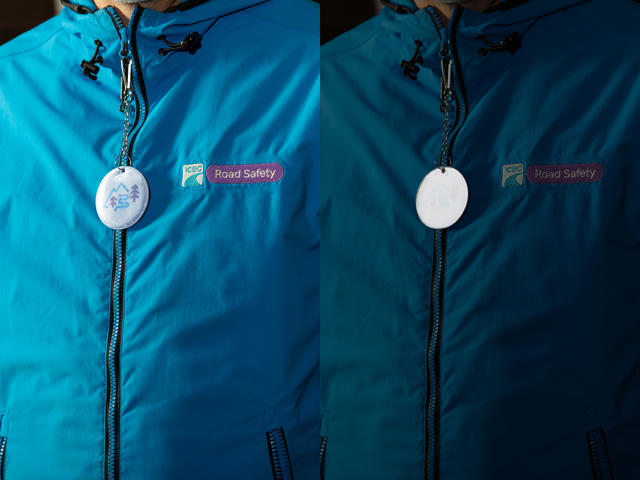
Keeping pedestrians safe takes everyone. If you're driving, slow down, stay focused and watch for pedestrians and other vulnerable road users, especially at intersections, transit stops and when turning.
Read about how safety reflectors are helping students stand out on darker school mornings.
Tips for drivers
Focus on the road. Always leave your phone alone while driving.
Look for pedestrians, especially when turning at intersections, crosswalks and near transit stops.
Give as much space as possible when following and passing pedestrians. Maintain a distance of at least:
0.5 metre in areas with a separated and protected sidewalk
1 metre in areas with a maximum speed limit of 50 km
1.5 metres in areas with speed limits above 50 km
Reduce your speed in areas with pedestrians. The simple act can help lower the chance of pedestrian injuries or even fatalities.
Be realistic about your travel time. Leave earlier to accommodate traffic and other unexpected hold ups so you can take your time looking for pedestrians.
Prepare your vehicle for bad weather. Make sure your headlights are working, tires are properly inflated, wiper blades are functioning properly, and your wiper fluid is topped up.
Tips for safe walking
Be careful at intersections. Watch for drivers turning left or right through the crosswalk. Drivers may be focused on oncoming traffic and not see you.
Always use crosswalks and follow the pedestrian signs and traffic signals. Scan your surroundings before crossing to ensure it’s safe and that traffic has come to a complete stop.
Make eye contact with drivers, as it's hard to see pedestrians when visibility is poor in fall and winter. Never assume that a driver has seen you.
Remove your headphones and take a break from your phone while crossing the road.
Wear high-visibility reflectors to make it easier for drivers to see you in the rain, snow, at dusk and at night.

